
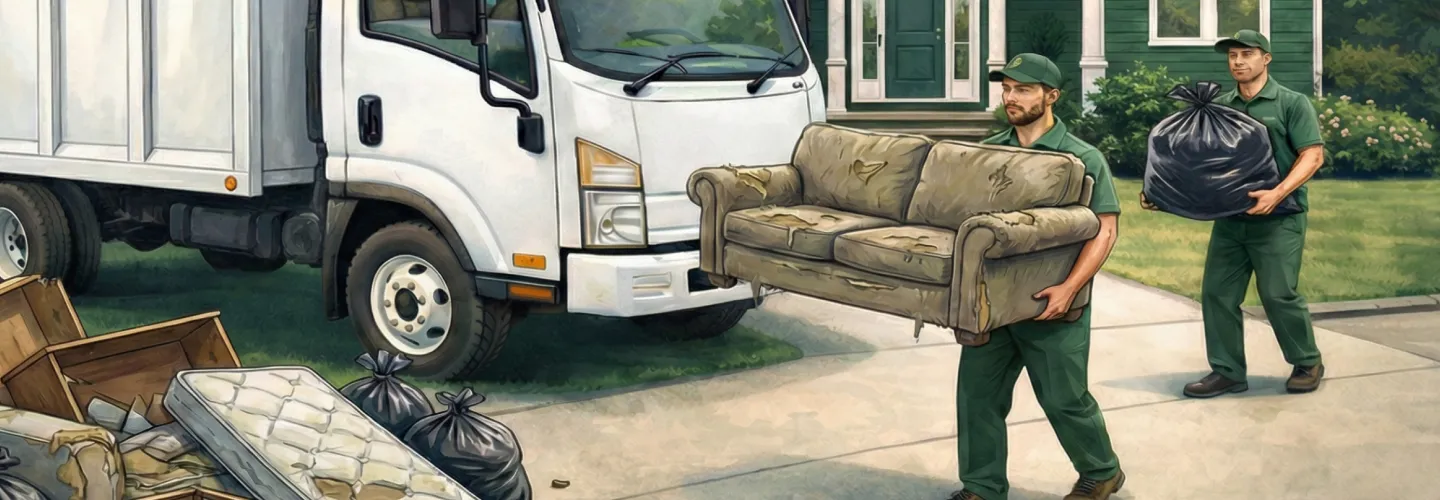
Abington Foreclosure Clean Outs Services
Choose our Foreclosure Clean Outs for reliable, efficient service that restores your property’s value and appeal—handled by professionals who care about your peace of mind.
Get a Free QuoteOur Abington Junk Removal Services
Foreclosure Clean Outs in Abington, MA – Local Service Guide
Foreclosure clean outs in Abington, MA require a local touch and a deep understanding of the town’s neighborhoods, from North Abington to the area near Island Grove Park. These projects often arise after property transitions, bank repossessions, or sudden life changes, and timing is crucial—especially during spring and fall when real estate activity peaks. For residential items like furniture, appliances, or even hot tubs, local disposal options include donation centers or recycling facilities, but weather and property access (think tight driveways in older neighborhoods) can impact logistics. Spaces such as garages and basements often need attention after storms or during seasonal yard cycles, particularly in flood-prone areas near Beaver Brook. Commercial clean outs in Abington’s business districts, like those along Route 18, demand discretion and efficient scheduling to minimize downtime. Specialty services, such as handling hoarding or estate situations, require careful planning and coordination with local authorities. For all clean outs, understanding Abington’s disposal rules and schedules is essential—visit the official town website for up-to-date resources.
Key Considerations for Foreclosure Clean Outs in Abington
- Timing clean outs with real estate cycles and local weather
- Securing necessary permits for large-scale disposals
- Choosing proper disposal or donation channels for various items
- Navigating property access in tight or flood-prone areas
- Estimating volume and coordinating with local schedules
- Addressing category-specific needs, such as electronics or hazardous materials
Benefits of Foreclosure Clean Outs in Abington
Fast Turnaround Times
Comprehensive Property Cleaning
Experienced Clean Out Professionals
Eco-Friendly Disposal Solutions
Flexible Scheduling Options
Affordable Foreclosure Clean Out Rates
Coordinating Foreclosure Clean Outs with Abington’s Solid Waste and Bulk Collection Programs
Foreclosure clean outs in Abington, MA must comply with the town’s solid waste management and bulk trash collection protocols. The Department of Public Works oversees monthly curbside bulk item pickup, which requires residents or property managers to schedule collection at least 48 hours in advance. Items must be placed curbside by 6:00 AM on the assigned day, and there is a limit of two cubic yards or 200 pounds per pickup. Prohibited items include construction debris, hazardous waste, and electronics, which must be handled separately. For larger volumes, the Abington Transfer Station accepts additional materials Monday through Saturday, 7:00 AM to 5:00 PM, with a valid resident permit and a disposal fee of $35 per ton (minimum $10 charge).
- Schedule bulk pickup 48 hours in advance
- Place items curbside by 6:00 AM
- Maximum 2 cubic yards or 200 pounds per pickup
- Transfer Station open Mon-Sat, 7:00 AM–5:00 PM
- Fees: $35/ton, $10 minimum
Department of Public Works
500 Gliniewicz Way, Abington, MA 02351
Phone: (781) 982-2122
Official Website: Department of Public Works
Abington’s Code Enforcement and Permit Requirements for Foreclosure Property Clean Outs
Property owners and contractors conducting foreclosure clean outs in Abington must adhere to local code enforcement and permitting requirements. The Building Department mandates permits for any structural alterations or removal of renovation debris. Right-of-way permits are required if removal vehicles need to park on public streets, with applications submitted at least five business days in advance. Code enforcement officers may inspect properties to ensure compliance with health and safety standards, including proper waste containment and prevention of illegal dumping. Violations can result in fines ranging from $100 to $500 per incident.
- Obtain building permits for structural debris removal
- Apply for right-of-way permits for truck parking
- Schedule inspections for code compliance
- Fines for violations: $100–$500 per incident
- Permit applications: minimum 5 business days in advance
Building Department
500 Gliniewicz Way, Abington, MA 02351
Phone: (781) 982-2100
Official Website: Building Department
Ensuring Environmental Compliance: Abington and Massachusetts Solid Waste Regulations
Foreclosure clean outs in Abington must comply with both local and state environmental regulations. The Massachusetts Department of Environmental Protection (MassDEP) enforces landfill bans on electronics, mattresses, appliances containing refrigerants, and hazardous materials. All electronics and mercury-containing products are prohibited from landfill disposal and must be recycled through approved programs. Appliances require certified refrigerant recovery before disposal. Paints, chemicals, and batteries must be taken to designated hazardous waste facilities. Violations of these regulations can result in significant penalties. For detailed guidance, consult the Massachusetts Department of Environmental Protection and review the Massachusetts Solid Waste Regulations.
- Electronics and mercury products: recycling required
- Mattresses: landfill ban, recycling encouraged
- Appliances: refrigerant removal certification
- Hazardous waste: use designated facilities
- Penalties for non-compliance: up to $25,000 per violation
Massachusetts Department of Environmental Protection
One Winter Street, Boston, MA 02108
Phone: (617) 292-5500
Official Website: Massachusetts Department of Environmental Protection
Recycling and Material Recovery Mandates for Foreclosure Clean Outs in Abington
Abington enforces strict recycling mandates for materials commonly encountered during foreclosure clean outs. The town’s recycling program accepts cardboard, paper, metal, and rigid plastics at the curbside and at the Transfer Station. Electronics, including TVs and computers, must be brought to approved e-waste collection events or recycling centers, as required by the state’s landfill ban. Mattresses and box springs are also banned from landfill disposal and should be recycled through local programs. Appliances must have refrigerants removed by a licensed technician before acceptance. Donation of reusable items to local charities is encouraged to reduce landfill waste.
- Curbside recycling: paper, cardboard, metal, rigid plastics
- E-waste: drop-off at designated events/centers
- Mattresses: recycle through approved programs
- Appliances: refrigerant removal required
- Donation: local charities accept furniture and household goods
Health Department
500 Gliniewicz Way, Abington, MA 02351
Phone: (781) 982-2119
Official Website: Health Department
What Neighborhoods Do We Serve Throughout Abington, MA?
- North Abington: Predominantly single-family homes with driveways, allowing for easier truck access. Older properties may require special handling for lead paint or asbestos during clean outs.
- Island Grove: Features historic homes and narrow streets, necessitating careful navigation and possible parking permits for removal vehicles.
- Center Abington: Mix of multi-family residences and small businesses. Bulk item removal often requires coordination with building management and adherence to commercial waste rules.
- Pond Street Area: Includes newer developments with HOA regulations that may restrict curbside placement and require advance notification for large-scale clean outs.
- Chestnut Street District: Contains a blend of older and newer homes; some properties have limited curb space, making scheduling and staging essential.
- South Abington: Larger lots and occasional rural access roads may require site assessment for heavy equipment and longer removal times.
- Railroad Street Corridor: Commercial and mixed-use buildings with limited parking and loading zones, requiring coordination with local authorities for access and compliance.