
Abington Estate Cleanout Services
Choose us for your estate cleanout needs and experience a stress-free process handled with care, respect, and professionalism—ensuring your property is cleared quickly and responsibly so you can focus on what matters most.
Get a Free QuoteOur Abington Junk Removal Services
Estate Cleanout in Abington, MA – Local Service Guide
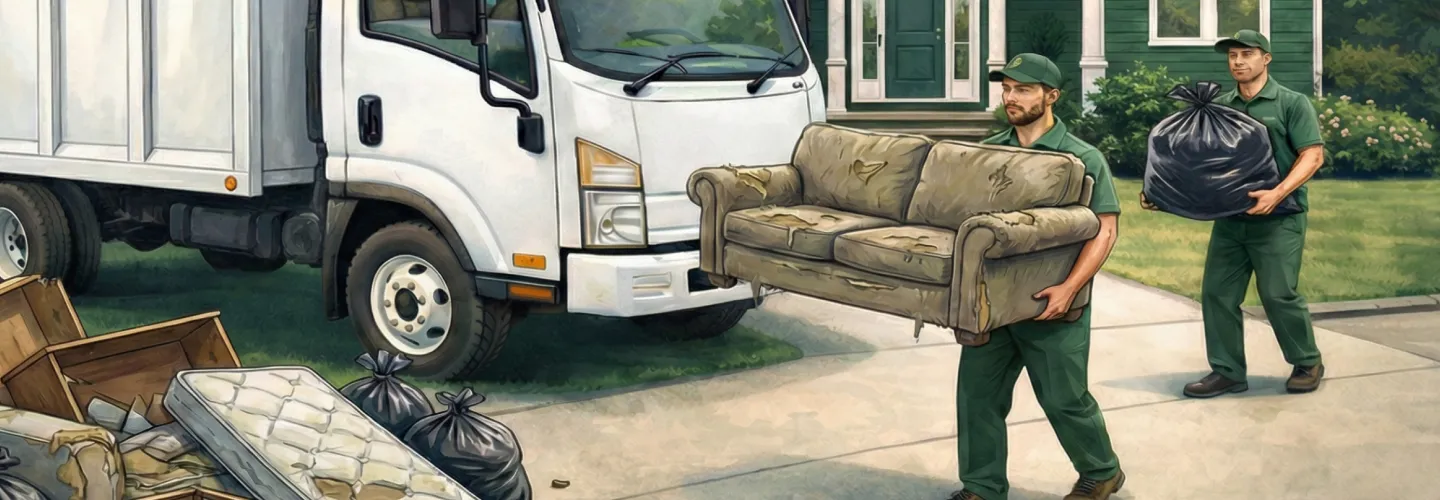
Estate cleanouts in Abington, MA, often arise during major life transitions such as downsizing, moving, or after a family loss. In neighborhoods like Island Grove and North Abington, residents frequently schedule cleanouts in spring and fall, coinciding with home sales or estate settlements. For residential items—furniture, mattresses, appliances, and even pianos—options include donation to local charities, recycling, or responsible disposal, with logistics shaped by driveway access, weather, and item size. Hot tubs and sheds may require special handling, especially in areas with tight property lines or limited street parking.
Garage, basement, and attic cleanouts are common after storms or during annual yard waste pickups, particularly in flood-prone zones near Beaver Brook. Commercial clients in Abington’s business districts, such as along Bedford Street, often need discreet, after-hours service for offices, restaurants, or retail spaces, with volume and timing tailored to operational needs. Specialty services—like dumpster rentals or hoarding cleanouts—require careful planning and coordination, especially for foreclosures or construction debris on larger properties.
Benefits of Estate Cleanout in Abington
Fast and Efficient Service
Experienced Cleanout Professionals
Eco-Friendly Disposal Solutions
Transparent Upfront Pricing
Flexible Scheduling Options
Comprehensive Estate Cleanout
Coordinating Estate Cleanout with Abington’s Department of Public Works and Solid Waste Programs
Estate cleanout projects in Abington, MA require careful coordination with the Department of Public Works (DPW) to ensure compliance with municipal waste management protocols. The DPW oversees bulk trash collection, which is available by appointment for large items such as furniture and appliances. Residents must schedule pickups at least 48 hours in advance, and items should be placed curbside by 6:00 AM on the designated day. The Abington Transfer Station, located at 360 Groveland Street, operates Monday through Saturday from 7:00 AM to 5:00 PM and accepts a wide range of household materials. Fees are assessed by weight, with a minimum charge of $10 and a standard rate of $35 per ton. Proper identification, such as a resident ID or utility bill, is required for access. Prohibited items include hazardous waste, electronics, and certain construction debris. For detailed program information and scheduling, consult the city’s official website.
Department of Public Works
500 Gliniewicz Way, Abington, MA 02351
Phone: (781) 982-2122
Official Website: Department of Public Works
- Bulk trash pickup requires advance scheduling
- Transfer Station open six days a week
- Fees: $10 minimum, $35 per ton
- Resident ID or utility bill required
- Prohibited items: hazardous waste, electronics, select debris
Abington’s Environmental Compliance: Landfill Bans, Recycling Mandates, and State Waste Laws
Estate cleanout activities in Abington must adhere to both local and state environmental regulations. Massachusetts enforces strict landfill bans on materials such as electronics, mattresses, appliances containing refrigerants, and mercury-added products. The Massachusetts Department of Environmental Protection (MassDEP) mandates recycling of these items through approved programs. Residents can drop off banned materials at designated recycling centers or participate in periodic hazardous waste collection events. Failure to comply with landfill bans may result in fines ranging from $100 to $500 per incident. The state’s Solid Waste Master Plan sets ambitious waste diversion goals, requiring separation of recyclables and compostables from general waste. Estate cleanout projects should prioritize sorting materials for recycling, donation, or proper disposal to avoid penalties and support environmental stewardship.
Massachusetts Department of Environmental Protection
One Winter Street, Boston, MA 02108
Phone: (617) 292-5500
Official Website: Massachusetts Department of Environmental Protection
- Landfill bans: electronics, mattresses, appliances, mercury products
- Recycling required for banned items
- Hazardous waste events held periodically
- Fines: $100–$500 for violations
- State waste diversion goals enforced
Permits, Code Enforcement, and Legal Requirements for Estate Cleanout in Abington
Estate cleanout operations in Abington may trigger several municipal permitting and code compliance requirements. Large-scale removals involving renovation or demolition debris often require building permits from the Building Department. If removal trucks or crews need to occupy public streets or sidewalks, a right-of-way permit must be obtained in advance. Historic properties or homes within designated districts may be subject to additional review and approval. Code enforcement officers monitor for illegal dumping, improper storage, and non-compliance with disposal schedules. Violations can result in citations or mandatory corrective actions. For commercial estate cleanouts, business licensing and proof of insurance may be required. Residents and contractors should consult the city’s official website for permit applications, fee schedules, and regulatory guidance.
Building Department
500 Gliniewicz Way, Abington, MA 02351
Phone: (781) 982-2100
Official Website: Building Department
- Building permits for renovation/demolition debris
- Right-of-way permits for truck/street access
- Historic district approvals as needed
- Code enforcement monitors compliance
- Commercial projects: licensing and insurance required
Safe Handling and Material Separation Standards for Estate Cleanout Projects in Abington
Proper handling and separation of materials are essential for safe and compliant estate cleanout in Abington. Items containing hazardous substances, such as lead paint or asbestos (common in pre-1980 homes), require assessment and may only be handled by licensed professionals. The Occupational Safety and Health Administration (OSHA) mandates worker safety protocols, including use of personal protective equipment and safe lifting techniques. Materials must be sorted into categories: recyclables, donations, hazardous waste, and general refuse. Electronics and appliances must be separated for recycling per state law. Residents should avoid mixing prohibited items with regular trash to prevent contamination and fines. For guidance on hazardous material handling, contact the Abington Health Department or consult the EPA’s Lead-Safe Renovation Rule.
Health Department
500 Gliniewicz Way, Abington, MA 02351
Phone: (781) 982-2119
Official Website: Health Department
- Lead paint/asbestos: licensed abatement required
- OSHA safety standards for workers
- Material separation: recyclables, donations, hazardous waste
- Electronics/appliances: separate for recycling
- EPA lead-safe work practices for pre-1978 buildings
What Neighborhoods Do We Serve Throughout Abington, MA?
- North Abington: Characterized by older single-family homes and historic properties, this area often requires careful handling of materials due to potential lead paint and narrow stairwells. Parking for removal trucks may be limited on residential streets.
- Island Grove: Known for its proximity to parks and multi-family residences, Island Grove cleanouts may involve coordination with property managers and adherence to HOA disposal restrictions.
- Center Abington: Featuring a mix of commercial and residential buildings, estate cleanouts here must account for business waste regulations and may require right-of-way permits for truck access during business hours.
- South Abington: Predominantly suburban with newer developments, this neighborhood offers easier driveway access but may have stricter HOA rules regarding curbside placement and collection schedules.
- Pond Street Corridor: With a blend of older homes and small businesses, cleanouts in this area often face challenges related to narrow driveways and limited bulk pickup windows.
- Chestnut Street Area: This district includes several senior communities, where estate cleanouts frequently involve downsizing and require sensitivity to resident needs and building access protocols.
- Railroad Street District: Industrial and mixed-use properties dominate this neighborhood, necessitating compliance with commercial disposal regulations and coordination with multiple stakeholders.